Reprinted with permission from : http://www.raindroptraining.com/messenger/v9n1.html#oils
A common question that I receive is whether or not essential oils can interfere or have adverse reactions with a prescription drug. In other words, if you are taking pharmaceuticals on the advice of a doctor, is it safe to use essential oils by any means (topically, orally, or by inhalation), at the same time as the drugs or not?
I researched essential oil/drug interactions thoroughly when I was writing my Chemistry Book and was unable to find a single citation or publication that indicated any adverse reactions between drugs and essential oils anywhere. If there is a problem between oils and pharmaceuticals, it must not be a serious one since no medical reference I checked referred to the topic. There were some precautions about over-using essential oils by themselves, but I found no publication, by a health care authority who uses both oils and prescriptions drugs, that mentioned any such problems.
I have heard verbal statements by uninformed doctors that there may be some adverse reactions between drugs and oils, but they cite no studies or evidence for their opinions. From my research I have not come across any problems between prescriptions and essential oils anywhere in print. This is not to say that adverse interactions between oils and drugs don’t exist. It could be that, at this time, such occurences may have just gone unreported. All I can say is that after a thorough search I could not find any reports of such reactions.
A review of the medical literature pertinent to this topic is found in Chapter Eleven of my Chemistry Book. Twenty-nine references were reviewed including works by medical doctors, pharmacists, registered nurses, and others. These included the following: “Medical Aromatherapy” by Kurt Schnaubelt, PhD; “The Merck Manual of Diagnosis and Therapy” edited by Mark Beers, MD, and Robert Berkow, MD; “L’Aromatherapie Exactement” by Pierre Franchomme, PhD, & Daniel Penoel, MD; “The Practice of Aromatherapy” by Jean Valnet, MD; “Clinical Aromatherapy: Essential Oils in Practice” by Jane Buckle, RN, PhD; “Freedom Through Health” by Terry Friedmann, MD; “Pharmacognosy and Pharmacobiotechnology” by James Robbers, PhD, Marilyn Speedie, PhD, and Varro Tyler, PhD, Sc.D.; “Clinical Aromatherapy for Pregnancy and Childbirth” by Denise Tiran, RN; ; “Physicians Desk Reference (PDR) for Herbal Medicine,” edited by Thomas Fleming, PharmD, Joerg Gruenwald, PhD, and Christof Jaenicke, MD; and many others.
Editor’s Note: David Stewart’s book, “The Chemistry of Essential Oils Made Simple” subtitled, “God’s Love Manifest in Molecules,” 848 pages, hardcover, $49.95 plus s&h, is available at the CARE Website, www.RaindropTraining.com.




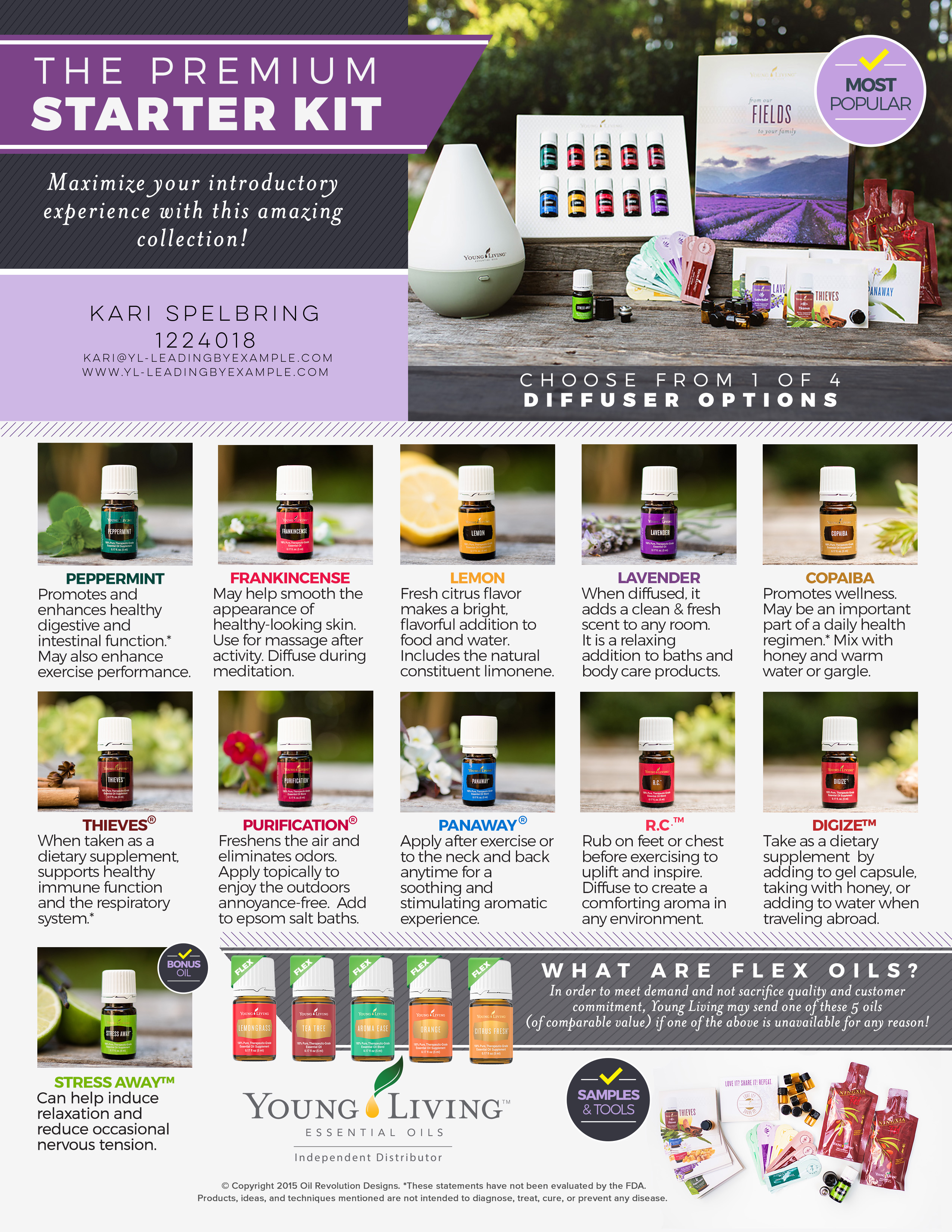
 Welcome to Leading by Example! My name is Kari Spelbring. God has blessed me with a fantastic husband and three wonderful children which I have had the pleasure of homeschooling. I had been making small changes to my families life for many years by eating healthier and trying to buy less toxic products for my home. When I found out about Young Living Essential Oils my life changed for the better. I am now even more conscious about toxins and healthy choices. I have many testimonials of what the oils have done for my family and friends.
Let’s Socialize!